You can fall in love with a Bailey parcel at first sight, then discover wells, septic, access, or wildfire rules change the plan. If you want to build a home in Park County’s foothills, a smart due diligence process protects your budget and timeline. In this guide, you’ll learn how to vet water, wastewater, driveways, slopes, and fire mitigation so you know whether a lot is truly buildable. Let’s dive in.
Start with a quick checklist
Before you write an offer, line up the essentials so you are not surprised later.
- Run a Denver Basin check. Use the Colorado Division of Water Resources (DWR) tool to see if Denver Basin aquifer rules apply to your parcel and whether special permits or water rights are needed. Start with the DWR Denver Basin Tract tool. (DWR Denver Basin Tract tool)
- Gather seller documents. Ask for the recorded well permit and well log, any well construction or pump records, the septic permit and drawings, any driveway or county access permits, HOA notes, and a recent plot plan. Park County lists these as standard submittals. (Park County Applications & Permits)
- Request a county Site Evaluation. Park County Environmental Health offers a Site Evaluation to give an early, nonbinding read on septic feasibility. You will need a plot plan showing the proposed well, septic, and driveway. (Park County Applications & Permits)
- Call the local fire district. In Bailey, coordination often involves Platte Canyon Fire and Fire Adapted Bailey. Ask about defensible space, access widths and turnarounds, and any water supply needs for permits. (Fire Adapted Bailey)
- Check soils early. A site soils evaluation will be required for septic design. Shallow bedrock, steep slopes, or seasonal groundwater can drive you to an engineered system.
Wells: what to verify
A reliable water source is critical in Bailey. Most new wells require a state well permit, and DWR provides the rules, search tools, and timelines.
- Confirm permits and logs. Ask for the well permit and well log, then verify it with DWR’s well permitting resources. If records are missing, treat that as a red flag and budget extra time. DWR reviews complete well permit applications in the order received, and review may take up to about 49 days. (DWR well permitting overview)
- Run the Denver Basin screen. Parts of Park County sit over the Denver Basin aquifers. If your parcel is in that area, different rules for allowable withdrawals and administrative steps may apply. Use DWR’s tract tool or request an Aquifer Determination before assuming any domestic well entitlement. (DWR Denver Basin page)
- Expect variable yields. In the Bailey area, many domestic wells draw from fractured crystalline rock with widely varying production. Yields can be modest on one lot and strong on a nearby site. USGS studies for Park County also note frequent radon detections and groundwater chemistry influenced by septic density in some areas. Plan to test your water and consider treatment solutions if needed. (USGS Park County groundwater fact sheet)
Practical next steps:
- Price and schedule drilling and pump work with a local well driller. Site geology drives cost and timing, so build in contingencies.
- Test for bacteria, nitrate, radon, and metals after drilling, and discuss treatment options if results warrant. Park County also provides well and drinking water safety guidance. (Park County well and drinking water safety)
Septic: rules and reviews
In Park County, septic systems are permitted by Environmental Health under Colorado’s Regulation 43 framework. Your design and cost depend on what the soil can handle.
- Know who regulates what. The state sets minimum standards under the On-Site Wastewater Treatment Systems program, and Park County implements local permitting and inspections. (CDPHE OWTS overview)
- Follow Park County’s process. You must obtain a septic permit prior to building. The county requires a plot plan that shows proposed well, septic tank, and leach field locations. Engineered plans are often required when site conditions are limited, such as shallow bedrock, high groundwater, small lots, or repairs. (Park County septic checklist)
- Expect a soils evaluation. A certified soil evaluation, including soil profile and percolation data, will determine whether a conventional gravity system is allowed or if an engineered alternative is required.
Local context to keep in mind:
- USGS work in Park County found that areas with many septic systems can show wastewater-related constituents in groundwater. That makes proper siting and separation distances even more important, especially on small or older lots near streams or seeps. Engineered designs are common in parts of Bailey. (USGS study on groundwater and ISDS)
Red flags to investigate:
- No septic permit on record, missing installation drawings, or an undocumented older system.
- Shallow bedrock or seasonal wet spots where you plan to place the leach field.
- Small lots with many neighboring septic systems that reduce separation options.
Access and driveways
Access affects safety, permitting, and build costs. Park County regulates driveway connections to county roads and will expect you to show driveway location on the plot plan.
- Get the right permit. A driveway or access permit is required from Park County Road and Bridge before constructing a driveway off a county road. The county maintains only roads in the county system. Many subdivision and private roads, plus driveway culverts, may be the owner or HOA’s responsibility. (Park County Development Guidelines)
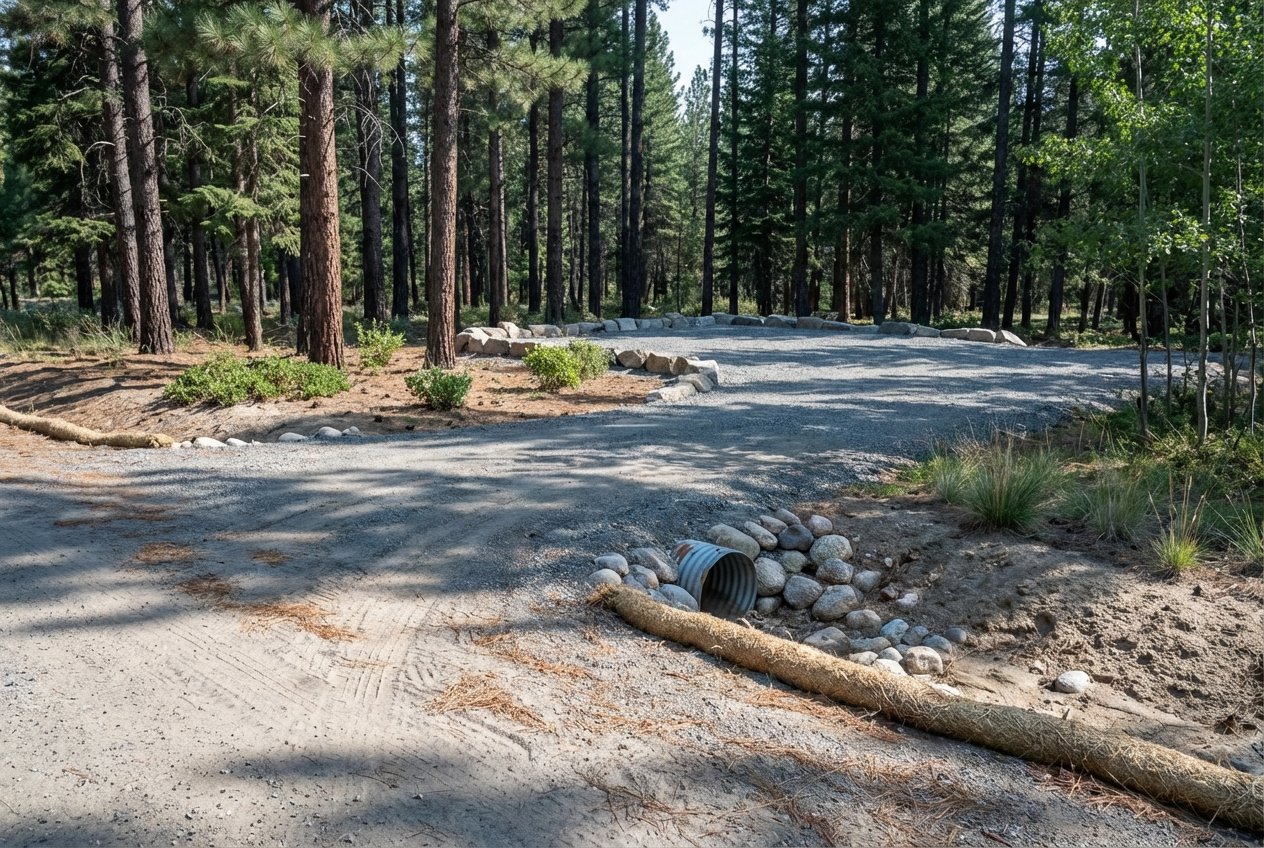
- Design for emergency access. Typical reviews cover slope and grade, sight distance, drainage and culverts, and turnouts or turnarounds for emergency vehicles. Park County provides a driveway checklist that outlines required documents and inspections. Confirm exact widths and grade limits with Road and Bridge and the local fire district early. (Park County driveway checklist)
- Watch for high-cost access. Long, steep, or narrow drives, or crossings over wetlands or intermittent streams, can add heavy costs and longer review times. If your best building site requires an extended private drive, adjust your budget accordingly.
Wildfire mitigation
Bailey and northern Park County sit in a high wildfire risk environment. Expect to coordinate with the local fire district during permitting.
- Know the standard. The Colorado State Forest Service Home Ignition Zone guidance outlines defensible space zones around a home and practical home-hardening steps, such as ember-resistant vents and noncombustible materials near structures. Use these guidelines to plan site clearing and building details. (CSFS defensible space publications)
- Coordinate early. Park County directs Bailey-area applicants to work with Platte Canyon Fire on wildfire mitigation related to building permits. Fire districts can require defensible space work and specify driveway widths and turnarounds to ensure access. Local partners like Fire Adapted Bailey offer homeowner resources and community programs. (Fire Adapted Bailey)
Action items:
- Map defensible space zones on your plot plan before you place the house.
- Budget for tree thinning, slash disposal, and any structural measures the fire district may require.
Slope, soils, and geotech
Mountain topography shapes your design and costs. In Bailey, shallow or fractured bedrock and steep slopes are common.
- Why it matters. Slope affects driveway grades, emergency access, foundation type, drainage controls, and septic placement. Shallow or fractured rock can make conventional leach fields infeasible and push you to engineered systems. Park County often requires engineered plans when conditions are marginal. (Park County septic checklist)
- When to order reports. If slopes exceed roughly 15 percent, bedrock is visible near the surface, wetlands or streams are present, or early soils data show slow permeability, plan on a geotechnical soils report and a septic design by an engineer.
Pro tip:
- Align your test pits, geotech borings, and septic evaluation with your anticipated house site. Moving the house pad later can change the feasibility picture.
Costs and timelines
Every parcel is different, but you can still plan the process.
- Permit timing to expect. Park County notes that septic and driveway permits are typically issued within about 7 to 10 days after the first inspection, although seasonal volume can extend timing. Building plan review varies with engineering needs. The state well permit review of a complete application can take up to about 49 days, and Denver Basin adjudication or water court steps, if needed, add time. (DWR well permitting overview)
- Budget categories to price locally. Big variables include well drilling and pump installation, septic design and installation, driveway construction and culverts, geotechnical and engineered foundation work, wildfire mitigation, and power trenching. Industry summaries show wide cost variation for well drilling by geology and depth, so get land-specific quotes rather than relying on national averages. (Well drilling cost overview)
How to move forward in Bailey
You can make a Bailey land purchase predictable by front-loading the right checks and conversations.
- Start with county and state resources. Use Park County’s permit pages for submittal checklists and call Environmental Health early about Site Evaluations, septic design expectations, and transfer-of-title requirements for any existing system. (Park County Applications & Permits)
- Verify water path. Confirm the well permit, run the Denver Basin screen, and plan water quality testing with a local lab after drilling. (DWR Denver Basin page)
- Align access and fire from day one. Sketch your driveway and building pad with emergency access and defensible space in mind to avoid rework later. (Park County driveway checklist)
If you want a local partner to coordinate these moving parts, reach out to Trang Janick. As a Certified Mountain Area Specialist focused on Bailey and the surrounding foothills, she can help you sequence due diligence, connect you with trusted local pros, and negotiate with confidence when the land checks out.
FAQs
What should I check first when buying land in Bailey, CO?
- Start with Park County’s permit resources, pull the seller’s well and septic records, run the DWR Denver Basin tool, and call the local fire district about defensible space and access.
How long does a Colorado well permit take for a Bailey parcel?
- DWR reviews complete well permit applications in the order received, and review may take up to about 49 days, so build that into your timeline.
How do I know if my Bailey lot needs an engineered septic system?
- A certified soil evaluation will determine feasibility; shallow bedrock, slow soils, high groundwater, small lots, or repairs often trigger engineered designs under Park County rules.
What access rules affect building a driveway in Park County?
- You will need a county driveway permit for connections to county roads, and designs must meet slope, sight distance, drainage, and emergency access standards confirmed with Road and Bridge and the fire district.
How serious is wildfire risk when building in Bailey, CO?
- The area is high risk, so fire districts often require defensible space and access standards; follow the CSFS Home Ignition Zone guidance and coordinate with the local fire district during permitting.