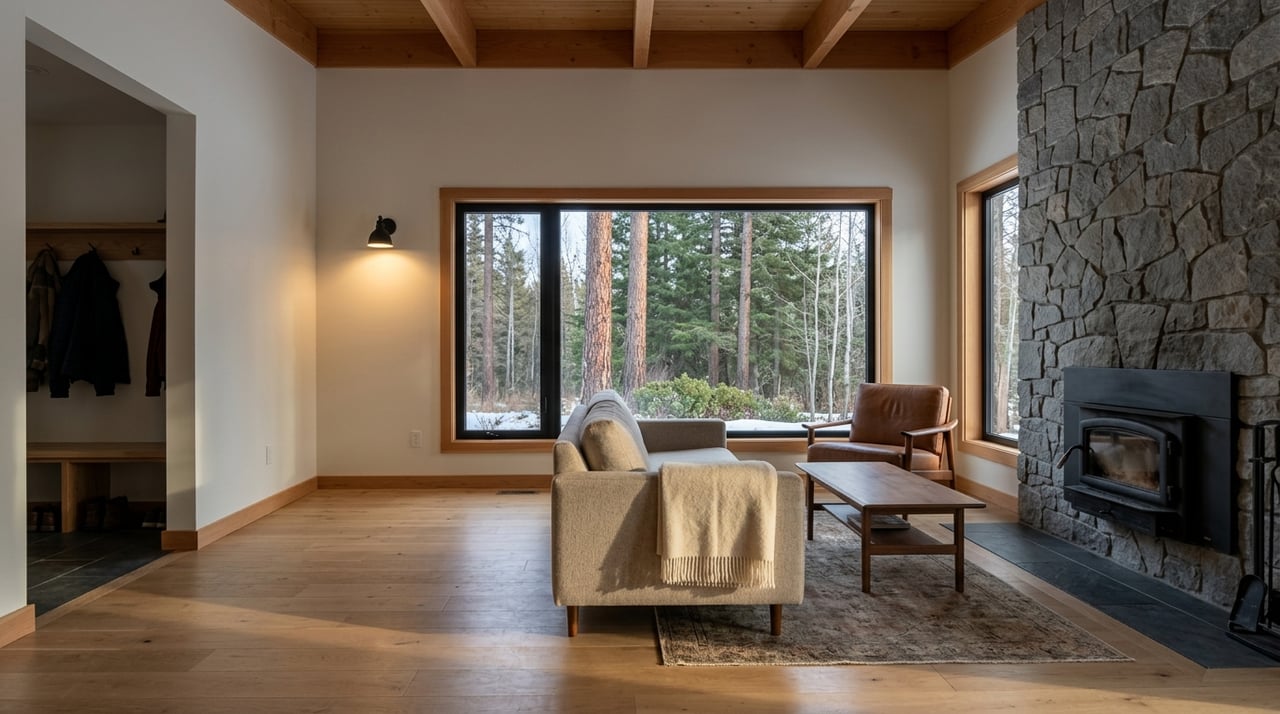
Wondering if your Bailey cabin can truly handle full-time mountain living? It can, but the path is usually less about pretty finishes and more about making sure the home works well in every season. If you are thinking about turning a weekend place into your primary home, this guide will help you focus on the upgrades and due diligence that matter most in Bailey. Let’s dive in.
Why Bailey conversions are different
Bailey offers the kind of mountain setting many buyers want, with Park County describing it as about an hour from Denver. That balance can make Bailey appealing if you want more privacy and a foothills lifestyle without feeling completely disconnected from the metro area.
At the same time, Park County also describes the area as rural, with few paved roads, strong winds, longer winters, and winter lows that can drop more than 20 degrees below zero. Some roads may be snowed in for several days, which means comfort starts well before you pick countertops or paint colors.
For a primary-home conversion, you need to think about year-round access, heat, water, wastewater, and site readiness. In Bailey, those basics often shape both your budget and your timeline.
Start with legal use and permits
Before you plan cosmetic updates, confirm whether the cabin can legally function as a full-time home. Park County states that buildings used for sleeping must have electrical, plumbing, sanitation facilities, and running water. If your cabin is more primitive than that, it is not automatically ready for primary residential use.
Park County Development Services manages permitting, licensing, and code enforcement through its CloudPermit system. The Building Department handles building permits and inspections for most of Park County, except the towns of Fairplay and Alma.
If your project includes structural work, Park County says plans in this wind and snow load area must be stamped by a Colorado Registered Structural Engineer. Snow and wind loads depend on the property’s location and elevation, so this is not a one-size-fits-all remodel.
It is also important to know that plumbing and electrical permits are handled through the State of Colorado. That is one more reason to treat this as a systems project, not just a cabin refresh.
Check these four items early
In Bailey, some of the biggest conversion issues show up outside the house itself. Before you commit to a project, or before you buy with plans to convert, it helps to review these early-stage items:
- Septic: Park County says a septic system permit must be obtained before applying for a building permit.
- Well water: Before drilling a well, owners must get a well permit from the Colorado Division of Water Resources, and review of complete new or replacement applications can take up to 49 days.
- Driveway access: Park County requires driveway locations to be identified before construction, and Environmental Health handles driveway permits.
- Permit pathway: Building, engineering, septic, electrical, and plumbing reviews may involve different departments or agencies.
If even one of these items needs major work, your timeline and budget can shift fast. That is why early due diligence matters so much in mountain properties.
Water and septic deserve special attention
Most homes and businesses in Park County rely on private wells. That makes well condition and water quality a normal part of planning for full-time living in Bailey, not an extra step for only a few properties.
Park County recommends certified lab testing for bacteria, nitrates, radioactivity, and metals before household use. If you are converting a seasonal cabin, this testing can help you understand whether the current setup supports daily living or needs updates.
Septic is just as important. Because Park County requires septic permitting before a building permit application, wastewater planning should happen at the very beginning of your project. If the existing system is older, undersized, or not aligned with full-time use, it may become one of the most important budget items.
Road access can make or break comfort
One of the most overlooked parts of living in a mountain home is getting to it reliably in winter. Park County says it only maintains roads on the county road system and does not maintain private roads or roads outside that system.
The county also notes that some remote roads may be graded only once a year or not at all. For snow removal, lower-priority service may be a courtesy rather than a requirement, and roads are not plowed unless they have been dedicated to the public and accepted for county maintenance.
That means you should verify road status before assuming year-round access will feel easy. A cozy cabin can lose a lot of its charm if winter access is uncertain.
Prioritize the building envelope first
If your goal is year-round comfort, the smartest upgrades often start with the shell of the home. The U.S. Department of Energy says a home should be properly insulated from the roof down to the foundation, and if the house still feels drafty after attic work, exterior wall insulation may be needed.
DOE also notes that insulation and air sealing work together to reduce drafts, cold spots, moisture problems, and energy loss. In a Bailey cabin, that can make a major difference in both comfort and monthly operating costs.
This is why many successful mountain-home conversions begin with the building envelope before interior design upgrades. A beautiful kitchen will not solve cold floors, drafts, or uneven temperatures.
Envelope upgrades to consider
- Air sealing around doors, windows, penetrations, and attic bypasses
- Insulation improvements from roofline to foundation
- Exterior wall insulation review if the cabin still feels drafty
- Moisture management improvements tied to insulation work
Choose heating for real winter conditions
Heating equipment matters in Bailey, but sizing matters just as much as the equipment itself. ENERGY STAR says properly sized HVAC systems are essential and contractors should use Manual J sizing.
That point is especially important in mountain homes, where underpowered or poorly matched systems can struggle in cold weather. A system that looks good on paper may still leave parts of the house uncomfortable if it is not designed for the home’s actual needs.
ENERGY STAR also says cold-climate heat pumps can provide heating even when winter temperatures regularly dip below freezing, with verified low-temperature performance tested down to 5 degrees Fahrenheit. In colder conditions, they may be paired with backup heat.
For many Bailey cabin conversions, the best results come from combining air sealing, insulation, and properly sized heating equipment. Those upgrades work together better than any one fix on its own.
Treat wildfire hardening as a core upgrade
In mountain communities, safety upgrades are part of livability. Park County adopted a new Wildland-Urban Interface fire-risk classification map in April 2026, and the Colorado State Forest Service says homes in or near natural vegetation are at risk from wildfire.
That is why wildfire mitigation should be part of your primary-home conversion plan from the start. These are not just nice-to-have improvements. They are practical steps that can support safer, more resilient living.
Wildfire hardening priorities
- Class A roofing
- Roofs and gutters kept free of debris
- 1/8-inch metal mesh on vents
- Tempered-glass windows
- Defensible-space work around the home
If you are planning major upgrades anyway, this is a smart time to fold fire-hardening into the project scope.
Build your budget in five buckets
A realistic Bailey cabin conversion budget usually goes beyond finishes. Park County’s requirements show why it helps to organize the work into clear categories.
Here is a simple way to frame it:
- Permits and engineering
- Road and driveway work
- Water and wastewater
- Envelope and HVAC
- Wildfire mitigation
This structure can help you compare properties more clearly, too. One cabin may look less expensive up front, but if it needs septic work, access improvements, and major insulation upgrades, the true cost of full-time comfort can be much higher.
Think long term, not weekend style
If you are moving from Denver or another Front Range area, Bailey can offer a compelling blend of mountain living and metro access. Park County’s estimate of about an hour to Denver helps explain why so many buyers see the area as a workable primary-home option.
Still, the right question is not just whether a cabin looks charming today. The better question is whether it can support your daily life in January, during wind events, through utility maintenance, and across a full year of mountain weather.
That is where local, property-specific guidance becomes valuable. A cabin that works beautifully as a getaway may need meaningful upgrades before it feels comfortable and practical as your everyday home.
If you are weighing a Bailey cabin purchase or planning a conversion, a clear review of access, systems, and improvement costs can save you time, money, and stress. When you want guidance rooted in foothills experience, connect with Trang Janick for thoughtful help navigating Bailey and the surrounding mountain market.
FAQs
Can a Bailey weekend cabin be used as a primary residence?
- Not automatically. Park County says buildings used for sleeping must have electrical, plumbing, sanitation facilities, and running water.
What should you check first when converting a Bailey cabin?
- Start with septic, well water, driveway access, and the permit path, since Park County ties these items closely to construction approval and year-round use.
Does Park County guarantee snow plowing for Bailey roads?
- No. Park County plows only roads accepted for county maintenance, and lower-priority snow removal may be limited.
What upgrades improve comfort most in a Bailey primary home?
- Insulation, air sealing, and properly sized heating equipment are among the most important upgrades for year-round comfort.
Why is wildfire mitigation important for Bailey homes?
- Park County and the Colorado State Forest Service identify wildfire risk for homes in or near natural vegetation, so home hardening and defensible space are important parts of long-term livability.